The Best Chocolate Dessert Recipes from Around the World

Chocolate is more than a universal language of indulgence, it’s a cultural bridge that connects countries through shared sweetness and creativity. Every corner of the world has a unique way of transforming this simple ingredient into something extraordinary, often tied to local ingredients, climate, and tradition. Traveling through these recipes feels like journeying across continents, one velvety bite at a time, each dessert revealing a piece of its homeland’s story.
French Chocolate Soufflé
The French chocolate soufflé is the definition of elegance. It combines richness with airiness, resulting in a dessert that’s both decadent and delicate. Each spoonful feels like biting into a chocolate cloud. The magic lies in the technique, folding whipped egg whites into a chocolate base and baking it just long enough for the exterior to set while the center remains molten.
What makes it timeless is its balance of textures. I always find that the aroma filling the kitchen as it rises is as satisfying as the first bite. It’s best served immediately, dusted with powdered sugar, and perhaps with a spoonful of crème anglaise or a drizzle of dark chocolate sauce.
Italian Torta Tenerina
In Italy, chocolate desserts often celebrate simplicity, and the Torta Tenerina from Ferrara is a prime example. This cake is famous for its crisp outer shell and soft, almost truffle-like center. It doesn’t rely on flour for structure but instead lets the cocoa and eggs create a dense, moist texture that melts on the tongue.
The Torta Tenerina is sometimes called the “Queen of Cakes” because of its understated sophistication. I like to serve it with fresh whipped cream or a sprinkle of sea salt. It’s a humble yet unforgettable dessert, made even more charming by its cracked surface, which hints at the gooey richness beneath.
Austrian Sachertorte
The Sachertorte is Vienna’s proud contribution to the chocolate world, a dense chocolate sponge layered with apricot jam and covered in a glossy dark chocolate glaze. It’s both regal and comforting, offering a perfect balance between sweetness and bitterness.
Traditionally, it’s served with a generous dollop of unsweetened whipped cream, which cuts through the richness. I’ve always admired how Austrian desserts prioritize depth of flavor over flashiness, and the Sachertorte embodies that approach beautifully. It’s a dessert that feels like a warm embrace wrapped in sophistication.
American Chocolate Brownies
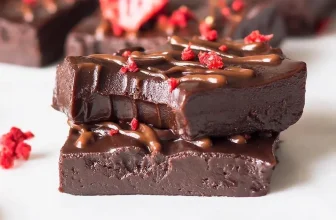
In the United States, few desserts capture the nation’s spirit like the chocolate brownie. Its origins go back to the early 20th century, but its charm has never faded. Dense, fudgy, or cake-like, every version speaks to comfort and indulgence. I personally prefer mine slightly underbaked, with a crisp edge and gooey center.
Brownies have become a canvas for creativity, swirled with caramel, topped with sea salt, or infused with espresso. They’re quick to make and universally adored. Served warm with a scoop of vanilla ice cream, they remind me why some of the best desserts are the simplest.
Mexican Mole and Chocolate Tamales
In Mexico, chocolate is more than dessert, it’s heritage. The traditional use of cacao dates back thousands of years, and today it still appears in savory and sweet forms alike. Mole poblano, a rich sauce made with chocolate, spices, and chilies, showcases how chocolate can add depth and complexity beyond sweetness.
But for pure dessert indulgence, chocolate tamales are a hidden gem. Made from masa dough mixed with cocoa and sugar, they’re steamed in corn husks and often served with a touch of cinnamon. I find them deeply comforting, combining earthy and sweet flavors in a way that feels both ancient and new.
Swiss Chocolate Fondue
Switzerland may be famous for its chocolate bars, but the fondue brings a sense of communal joy that few desserts can match. Melted chocolate served in a pot over gentle heat, surrounded by bowls of fruit, marshmallows, and bits of cake for dipping, every bite is a small celebration.
The charm lies not just in the flavor but in the shared experience. The fondue becomes more than dessert, it’s a ritual of laughter, conversation, and slow indulgence. I often pair mine with ripe strawberries and bananas, though a touch of kirsch or dark rum in the chocolate takes it to another level.
Japanese Nama Chocolate
Japan’s take on chocolate is elegant and minimalist, perfectly represented by Nama chocolate. Made with high-quality chocolate and fresh cream, it resembles a ganache but is cut into small cubes and dusted with cocoa powder. The result is incredibly smooth, melting instantly in the mouth.
What makes it special is the precision behind it. Each piece must be uniform, and the ingredients must be perfectly balanced. It’s often stored chilled and served as a luxurious treat. I love how it bridges Japanese refinement with European confectionary traditions, proving that simplicity can be the pinnacle of indulgence.
Belgian Chocolate Mousse
Belgium’s chocolate legacy is unmatched, and chocolate mousse is one of its finest showcases. Silky, airy, and rich, it’s the kind of dessert that satisfies without overwhelming. A good mousse relies on quality chocolate and the perfect ratio of air to cream, creating a texture that feels luxurious yet light.
What I enjoy most about Belgian mousse is its adaptability. You can layer it with fresh berries, top it with curls of dark chocolate, or add a splash of liqueur for depth. Every spoonful carries that unmistakable Belgian mastery of chocolate craftsmanship.
Argentine Chocotorta
Argentina’s chocotorta is the epitome of no-bake brilliance. Made with chocolate biscuits soaked in coffee and layered with dulce de leche mixed with cream cheese, it’s creamy, bittersweet, and utterly irresistible.
It’s a dessert that requires no oven yet delivers enormous satisfaction. The flavors deepen as it chills, making it even better the next day. Whenever I make it, I’m reminded how innovation and simplicity can create something spectacular without a single complicated step.
Ghanaian Chocolate Tart
Ghana is one of the world’s largest cacao producers, and local chocolatiers are redefining how African chocolate is seen globally. The Ghanaian chocolate tart is rich and robust, often made with dark chocolate that has deep, earthy undertones.
The filling is smooth and velvety, often accented with coconut or palm sugar. I find it remarkable how Ghanaian chocolate carries natural fruitiness, making it distinct from European blends. Each bite feels like a tribute to the soil and sun that nurtured the beans.
Turkish Chocolate Baklava
Turkey’s fusion of Middle Eastern flavors with chocolate has led to the creation of chocolate baklava, an indulgent twist on a classic. Layered phyllo dough, crushed nuts, and rich chocolate syrup combine to form an experience that’s both familiar and thrillingly different.
Unlike traditional baklava soaked in honey, the chocolate version brings a deeper, more complex sweetness. The contrast of crisp pastry and smooth chocolate is enchanting, and I love serving it with strong Turkish coffee for a truly authentic pairing.
Filipino Tsokolate Eh
The Philippines’ tsokolate eh is a drinkable dessert, a thick, frothy hot chocolate made from tablea (pure cacao tablets). It’s traditionally whisked using a wooden batidor, creating a foamy texture that feels rustic and comforting.
It’s both rich and earthy, often enjoyed at breakfast or merienda, but I’ve always considered it an indulgent dessert in itself. It connects deeply to Filipino culture, carrying the warmth of family gatherings and the legacy of cacao cultivation in the region.
The Global Thread of Chocolate
Exploring chocolate desserts across the world reveals more than culinary skill, it shows how each culture interprets pleasure, comfort, and craftsmanship. Whether it’s the refined precision of Japan, the rustic soul of Mexico, or the romantic indulgence of France, chocolate binds us all in shared appreciation.
Every dessert carries its region’s signature touch, transforming cacao into stories of flavor and history. I’ve realized that no matter how far apart these recipes originate, they all share one thing: the ability to evoke emotion with every bite.
Chocolate may have started as a drink of the gods in ancient civilizations, but today, it stands as a testament to human creativity. Each culture leaves its mark, ensuring that the story of chocolate never stops evolving. The world’s best chocolate desserts remind us that indulgence, in all its forms, can be both universal and deeply personal.