Ghana’s Cacao Farmers: The Real Heroes Behind Your Chocolate

I’ve always believed that behind every silky square of chocolate lies a story far richer than any confection could ever capture. Nowhere is that truer than in Ghana, a nation where cacao farming is not just a job but a deep-rooted tradition woven into the very fabric of its people. The world may adore its chocolate bars and truffles, but few realize the human labor, patience, and heart that begin the process, often under the blazing sun in small villages where cacao trees grow like symbols of endurance and pride.
The Beating Heart of Ghana’s Economy
Cacao is more than a crop in Ghana, it is a lifeline. The country is the second-largest producer of cacao in the world, trailing only the Ivory Coast. It’s an industry that supports millions of families, shaping the rhythm of rural life in regions like Ashanti, Brong-Ahafo, and Western North. In these areas, children often grow up watching their parents tend to cacao trees with a devotion that borders on spiritual.
Many farms are small, rarely exceeding a few acres. They’re family-run, passed down through generations as both inheritance and legacy. The work is physical, demanding, and largely dependent on weather patterns and market fluctuations. Yet, for many Ghanaian farmers, cacao represents dignity, a bridge between heritage and survival.
I remember hearing one farmer describe his cacao trees as “family members that never stop giving.” His sentiment revealed something profound: cacao farming in Ghana isn’t just about commerce, it’s about identity.
The Ancient Bond Between People and the Cacao Tree
Long before multinational chocolate brands existed, cacao already held a sacred place in West African life. The cacao tree, originally brought to Ghana from South America in the 19th century, found in its new home the perfect conditions to flourish. The soil, rich in nutrients, and the climate, with its predictable mix of sunshine and rainfall, created an environment where cacao could thrive naturally.
Farmers began cultivating it not just as a trade commodity but as part of their daily rhythm. Each stage of the process, from harvesting the pods to fermenting the beans, was treated with care. Even today, the process remains remarkably traditional. Farmers use machetes to open ripe cacao pods, revealing the white, sticky pulp that coats the beans. The beans are then covered with banana leaves and left to ferment for several days, developing the flavor profiles that later define the chocolate we love.
What makes this ancient practice remarkable is that despite technological progress, much of Ghana’s cacao farming remains unchanged. The methods passed down by ancestors are still respected, and that adherence to tradition is part of what gives Ghanaian cacao its globally recognized quality.
The Struggle Beneath the Sweetness
For all its romantic associations, cacao farming is not without hardship. Prices on the global market often fluctuate, and farmers have little control over how much they earn for their beans. Many live on the edge of poverty, working tirelessly while international chocolate corporations reap the biggest profits.
In some areas, the infrastructure is minimal. Roads are unpaved, and transportation of harvested beans can take hours or even days, adding to production costs. Education, healthcare, and access to technology are often limited. For younger generations, the allure of city life sometimes overshadows the appeal of farming, leading to a slow decline in labor availability.
And yet, the resilience of Ghana’s cacao farmers is extraordinary. They wake before dawn, tending their fields with care and precision, ensuring that every pod is properly nurtured. They know that their beans will travel across oceans, ending up in the hands of chocolatiers in Belgium, Switzerland, and France. But despite rarely seeing the finished product, they take pride in knowing that their hard work brings joy to millions.
Government and Cooperative Support
In recent decades, efforts have been made to support farmers through cooperatives and government initiatives. The Ghana Cocoa Board (COCOBOD), for instance, plays a significant role in regulating prices and ensuring that farmers are paid fairly. They provide seedlings, fertilizers, and training programs that aim to improve yield and sustainability.
Cooperatives have also empowered farmers to pool their resources and negotiate better deals. By working collectively, they gain access to microloans, farming equipment, and educational workshops on topics like pest control and organic farming. These grassroots initiatives have transformed many rural communities, giving them both financial and social independence.
Fairtrade organizations have also stepped in, helping farmers secure certification that guarantees higher prices for ethically produced cacao. This movement not only improves livelihoods but also raises awareness among consumers who seek transparency and fairness in the products they enjoy.
The Art of Harvesting and Fermentation
Every step in the cacao-making process requires patience. Harvesting usually takes place twice a year, during the main and light crop seasons. Farmers handpick ripe pods using machetes, avoiding damage to the delicate flowers that will become the next generation of fruit.
Once the pods are gathered, they’re split open to reveal the wet beans inside. The sight is unlike anything most chocolate lovers could imagine, white, glossy seeds surrounded by pulp that tastes fruity and tangy. These beans are then fermented under banana leaves for up to a week. During this stage, heat and natural yeasts transform the beans chemically, unlocking the complex notes that define fine chocolate.
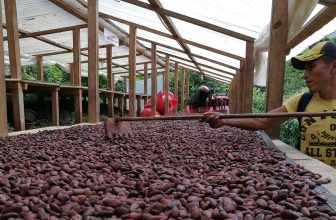
After fermentation, the beans are spread under the sun to dry. It’s an almost meditative sight, rows upon rows of cacao beans glistening under the Ghanaian sun. Farmers rake them regularly to ensure even drying, protecting them from mold and moisture. The dried beans are then bagged and transported to collection centers, where they’re graded based on quality.
Each bag represents weeks of labor, patience, and expertise. The smell of the beans, earthy and slightly sweet, is a reminder that great chocolate begins far from the factories, in the soil of Ghana’s fertile lands.
The Human Faces Behind the Beans
What moves me most about Ghana’s cacao farmers are their stories. Many are smallholders who inherited their farms from parents and grandparents. They measure time not by clocks but by harvest seasons. Their hands, calloused from years of work, carry the history of generations who have shaped the global chocolate industry.
I once spoke to a farmer named Kofi who had been growing cacao for nearly four decades. He told me he had never tasted a Belgian truffle or Swiss praline, yet he smiled proudly when I mentioned how prized Ghanaian beans are in those chocolates. To him, knowing that people around the world enjoy his harvest is enough reward. That quiet pride, that sense of contribution to something beautiful, is what makes these farmers the true heroes of chocolate.
Women in the Fields
In many Ghanaian villages, women play a crucial role in cacao farming. They manage fermentation, oversee drying, and handle market negotiations. Some have also taken leadership roles in cooperatives, advocating for better wages and access to education. Their contributions are immense, yet often overlooked in global narratives about chocolate production.
Empowering women farmers has shown remarkable results. Studies indicate that when women have control over income, families benefit more, children stay in school longer, healthcare improves, and communities thrive. The growing recognition of women’s involvement in cacao farming is a powerful step toward equality and sustainability.
The Shift Toward Sustainable Practices
Sustainability has become a pressing topic in the cacao industry. Climate change threatens yields, with unpredictable rainfall and rising temperatures impacting crop quality. In response, many Ghanaian farmers have begun adopting agroforestry practices, planting shade trees that protect cacao plants from excessive heat while improving soil fertility.
Organic farming is also on the rise. Farmers are reducing chemical fertilizer use and relying on natural composting methods. These shifts not only protect the environment but also enhance bean flavor, making Ghana’s cacao even more desirable to high-end chocolatiers.
Education plays a key role in this transformation. NGOs and research institutions collaborate with local farmers, teaching modern techniques while respecting traditional wisdom. It’s a balance between progress and heritage, one that ensures Ghana remains a leader in the global cacao market.
The Global Journey of Ghanaian Cacao
Once exported, Ghanaian cacao travels to countries like Belgium, Switzerland, France, and the United States. These beans become the foundation of some of the world’s most luxurious chocolates. The rich aroma and balanced flavor of Ghanaian cacao make it ideal for crafting smooth, full-bodied bars and truffles.
Yet, even as these chocolates delight consumers, the farmers who grow the beans rarely share in the wealth. That imbalance has sparked important conversations about ethics in the chocolate industry. Companies are now under pressure to create fairer supply chains and invest directly in farming communities.
Several premium chocolate makers have responded by sourcing beans directly from Ghanaian cooperatives, ensuring that more of the profits reach the farmers. This direct trade model not only benefits the producers but also fosters greater transparency for consumers who care about where their chocolate comes from.
A Future Rooted in Hope
The next generation of Ghana’s cacao farmers faces both challenges and opportunities. They must adapt to climate change, market volatility, and modern demands while preserving the craftsmanship that defines their heritage. Yet, the future holds promise.
Young entrepreneurs are returning to farming with renewed enthusiasm, integrating technology into age-old practices. Mobile apps now help farmers monitor weather patterns, manage finances, and connect with buyers. Educational programs are inspiring a new sense of pride in cacao cultivation, ensuring that the legacy of Ghana’s farmers endures.
The story of Ghana’s cacao farmers is ultimately one of resilience and humanity. They are the unseen architects of joy, the reason why chocolate can lift moods, spark love, and create memories. Every bar, truffle, or cup of cocoa carries a piece of their labor, a reminder that the sweetness we enjoy begins with their sweat, care, and devotion.
Conclusion
In a world obsessed with brands, packaging, and luxury, it’s easy to forget the origins of the chocolate we adore. But beneath the glossy wrappers and marketing campaigns lies the real story, the story of Ghana’s cacao farmers, whose tireless work sustains a global passion.
Their fields, their families, their traditions, all converge in the flavor of a single bite of chocolate. The next time I unwrap a bar and let it melt on my tongue, I know I’m tasting more than just a treat. I’m tasting the sun, the soil, the patience, and the humanity of those who made it possible. Ghana’s cacao farmers are not just suppliers of raw material, they are the true heroes behind every moment of chocolate bliss.